
About the Forestry Department
1. History and Development
The Department of Forestry at the University of Kurdistan was established in 1995 to address the scientific, research, and educational needs of the community in the field of natural resources and forestry. Initially, the department launched an Associate's degree program in Forest Technology with only two faculty members, Dr. Shahram Kaboudvandpour and Dr. Loghman Ghahramani. Through continuous effort and the development of appropriate infrastructure, the department received authorization to admit students to a continuous Bachelor's program in 1998, enrolling 30 students in its first cohort for the Forestry Engineering degree.
In 2006, the department successfully obtained approval from the Office for the Expansion of Higher Education to launch a Master's program. The first intake consisted of seven students in the specializations of Forestry (Forest Management) and Forest Science (Forest Life Sciences). This educational expansion underscores the growing importance and standing of the department in one of the country's most significant Zagros forest regions. In 2020, the department was granted permission to admit international students to the Ph.D. program in Forest Science and Engineering, marking a significant step in expanding its international activities.
Currently, the department's faculty includes six full-time members (four associate professors and two assistant professors) who, in collaboration with the Dr. Hedayat Ghazanfari Center for Research and Development of North Zagros Forestry, are actively engaged in teaching and research. The department's geographical proximity to the Kurdistan Region of Iraq provides a unique opportunity for it to be recognized as a leading regional scientific and research center, facilitating the education of researchers and graduates from neighboring countries and fostering regional cooperation.
2. Message from the Head of the Department
Dr. Ahmad Valipour, Head of the Department of Forestry, emphasizes the importance of conserving and sustainably managing the Zagros forest resources: "We in the Department of Forestry are committed to playing an effective role in the sustainable development and conservation of our country's natural resources, with a focus on the Zagros forests, by educating graduates proficient in modern knowledge and technologies. The quality of education, innovative research, and the transfer and application of new technologies are the cornerstones of our activities. Our approach is to address the needs of local communities, value their traditional and indigenous ecological knowledge, support and reform traditional forest management systems, leverage the potential of NGOs, provide solutions for forest management challenges, and establish a participatory management system involving all stakeholders."
3. Vision and Goals
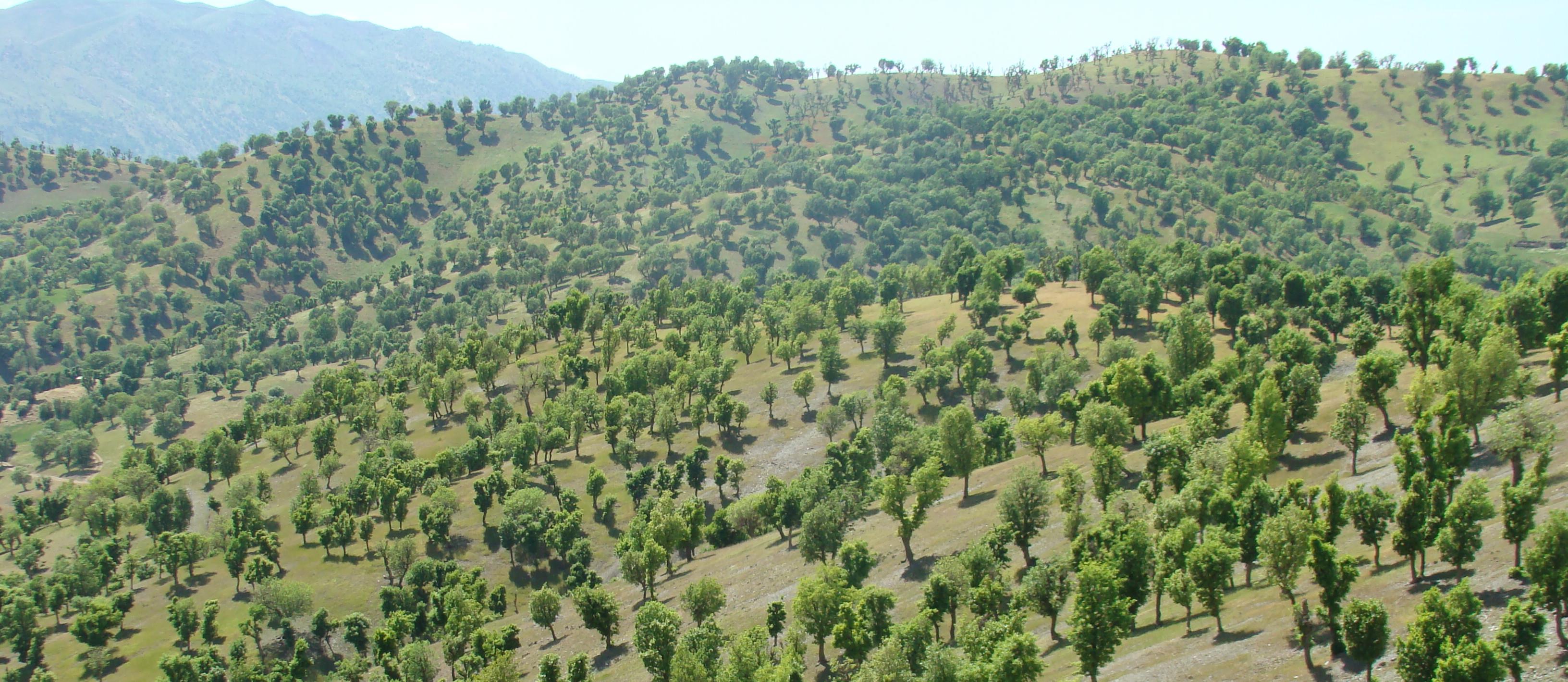
The Department of Forestry aims to play an effective role in the conservation, restoration, and management of the region's forests to promote sustainable development and the responsible use of the Zagros forest resources. By enhancing its scientific and research standards, training specialized and efficient personnel, and expanding both indigenous and global knowledge, the department intends to be recognized as a reputable authority in the field of Zagros forestry at the national and regional levels.
Key Objectives:
-
To train specialized and efficient personnel in forestry and natural resource conservation.
-
To conserve, manage, and sustainably utilize the country's forests and forest ecosystems, with a focus on the Zagros forests.
-
To develop scientific and applied research in the management of Zagros forests.
-
To integrate forest management with the socio-economic context and the principles of sustainable development.
-
To advance and develop modern knowledge and technologies in forestry and the life sciences of Zagros forests.
-
To promote the concepts of sustainable development and environmental protection within the community.
-
To foster national and international collaborations in education and research related to forests and natural resources.
-
To establish a participatory forest management system involving all stakeholders, including local communities, government, and NGOs.
4. Specializations and Activities
In addition to the Bachelor's program in Forest Science and Engineering, the department admits students annually to the following three key Master's specializations:
-
Forest Management
-
Forest Life Sciences
-
Forest Engineering and Harvesting
Furthermore, the admission of international Ph.D. students since 2020 represents a significant step toward expanding the department's scientific and international activities.
5. Position within the Faculty and University
As a key department within the Faculty of Natural Resources, the Department of Forestry plays a central role in education, research, and engagement with industry and society. Through collaboration with national and international research centers, the department contributes effectively to elevating the scientific and research profile of the faculty and the university, aiming to help solve environmental problems and promote the sustainable development of natural resources, with a particular focus on the Zagros forests.
6. Scientific and Research Areas
The various branches of the Forest Science and Engineering program at the University of Kurdistan familiarize graduates with forest ecosystems and their management solutions by offering a diverse set of core and specialized courses in areas such as forest management, silviculture, genetics and forest life sciences, forest ecology, and forest engineering. Upon graduation, students will be capable of conserving, maintaining, managing, and sustainably utilizing the country's forests and will be able to work on executive and research projects in various fields of natural resources. The department aims to empower its graduates to meet national and regional needs by:
-
Formulating policies and strategies for the sustainable management of Zagros forests.
-
Documenting traditional forest management systems and indigenous knowledge for adaptive forest management.
-
Conducting research projects on the management, biodiversity, and conservation genetics of Zagros forests.
-
Organizing conferences, workshops, and training courses related to Zagros forestry and silviculture.
-
Studying the impacts of climate change on the Zagros forest ecosystem.
-
Collaborating with national and international organizations on projects for the sustainable conservation and utilization of forests.
In summary, the Department of Forestry at the University of Kurdistan strives to conserve and restore natural resources and promote the sustainable development of the Zagros forests and regional ecosystems by utilizing modern scientific and research approaches. It is committed to educating a future generation of responsible, specialized, and dedicated professionals for the conservation and development of forests.


